
The marketing world has transformed dramatically over the past two decades. Once dominated by TV commercials, print ads, and billboards, today’s landscape thrives on digital screens, data, and algorithms.
The big question remains — which marketing approach delivers more value: digital or traditional?
Let’s break it down.
What is Traditional Marketing?
Traditional marketing refers to offline strategies used long before the internet era, focusing on mass communication through physical media.
Common Examples
- Television and radio ads
- Newspaper and magazine promotions
- Billboards, posters, and hoardings
- Flyers, brochures, and mail campaigns
- Sponsorships and event branding
Advantages
- Strong Brand Recall – Physical ads leave a lasting impression.
- High Credibility – Trusted media adds legitimacy.
- Local Impact – Perfect for regional or event-based campaigns.
- Emotional Appeal – Connects through nostalgia and storytelling.
Limitations
- Limited targeting
- Difficult ROI measurement
- One-way communication
- Geographic restriction
- High production and media costs
What is Digital Marketing?
Digital marketing leverages online channels to promote products, engage audiences, and measure success in real time.
Core Channels
- SEO (Search Engine Optimization)
- Social Media Marketing (Instagram, LinkedIn, YouTube)
- Pay-Per-Click Advertising (Google Ads, Meta Ads)
- Content Marketing (Blogs, Videos, Infographics)
- Email Marketing & Automation
- Affiliate & Influencer Collaborations
Advantages
- Precise Targeting – Reach users by interests, intent, and demographics.
- Real-Time ROI Tracking – Analyze performance instantly.
- Two-Way Communication – Build conversations, not just messages.
- Global Reach – Scale campaigns beyond borders.
- Budget Flexibility – Affordable for all business sizes.
- Data-Driven Optimization – Make decisions backed by analytics.
Limitations
- Competitive landscape
- Requires consistency
- Privacy & data concerns
- Dependence on platforms and algorithms
Digital vs Traditional Marketing: Key Comparison
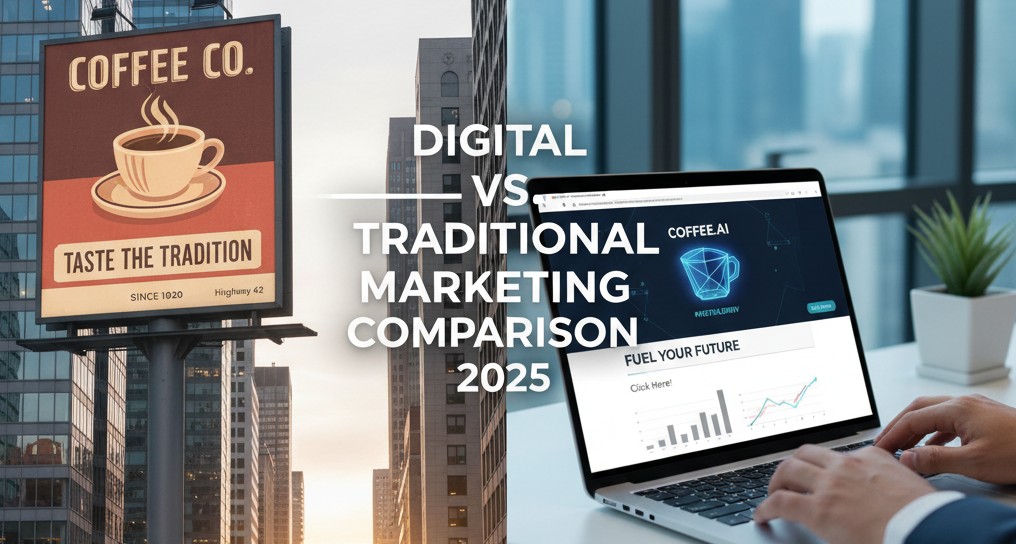
| Aspect | Traditional Marketing | Digital Marketing |
|---|---|---|
| Medium | TV, radio, print | Social media, search, websites |
| Reach | Local & limited | Global & scalable |
| Cost | Expensive | Cost-effective |
| Targeting | Broad | Data-driven |
| Communication | One-way | Interactive |
| ROI Tracking | Difficult | Instant |
| Adaptability | Fixed | Flexible |
| Engagement | Passive | Active |
Why ROI & Audience Understanding Matter
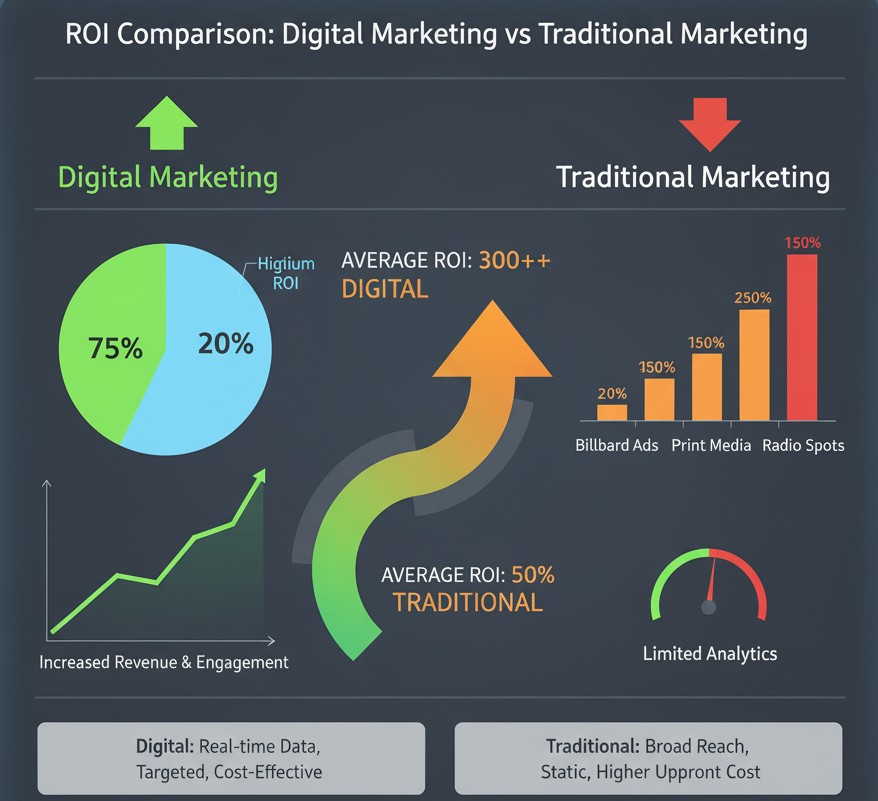
ROI (Return on Investment) is the heartbeat of marketing success.
Traditional campaigns measure results slowly, while digital analytics reveal performance instantly — tracking conversions, clicks, and cost per acquisition.
Understanding your target audience is equally crucial.
While traditional marketing relies on assumptions, digital marketing thrives on data-driven precision, ensuring every ad reaches the right viewer at the right moment.
The Power of Two-Way Communication
Today’s consumers expect dialogue, not monologue.
Traditional marketing speaks to audiences, while digital marketing speaks with them.
Through DMs, comments, and chatbots, brands foster trust, engagement, and long-term loyalty — turning customers into communities.
The Global Edge of Digital Marketing
Traditional media is restricted by location.
A billboard in Kolkata won’t reach clients in London — but a digital ad will.
Digital marketing enables brands to expand internationally at a fraction of the cost, making it the best tool for freelancers, startups, and global enterprises alike.
Integrating Both for Maximum Impact
Smart marketers combine traditional credibility with digital precision.
Example: A car brand runs a TV ad for awareness, then uses YouTube remarketing to convert leads online.
This hybrid approach boosts reach, trust, and ROI simultaneously.
The Future of Marketing
Digital marketing will dominate the next decade with AI, automation, and predictive analytics, but traditional storytelling still holds emotional power.
The future isn’t about choosing sides — it’s about strategic integration.
Both forms have their place.
Digital marketing wins for ROI, engagement, and global scale, but traditional marketing still builds authenticity and trust.
The ultimate strategy? Use both smartly — let tradition tell your story and digital amplify it
Ready to master digital marketing and scale your brand’s ROI?
👉 Visit RANIT KABITRAJ for actionable strategies, AI-driven tools, and marketing insights that help you grow smarter, faster, and stronger.
also visit UTSAB MONDAL for more Digital Marketing services